
Crypto DAO: Building a “Financial System That Cannot Do Evil” Through On-Chain Governance
As decentralized finance (DeFi) continues to evolve, the industry is entering a new phase—one defined not by rapid experimentation alone, but by deeper reflection on governance, security, and long-term sustainability. In this context, Crypto DAO is emerging as a next-generation decentralized financial system that seeks to address some of the most persistent structural challenges in DeFi.

Positioned as an open-source, community-driven, fully on-chain protocol, Crypto DAO is built around a core philosophy: Security, Stability, and Sustainability. Unlike many existing systems that rely on human-led governance, opaque decision-making processes, or centralized control points, Crypto DAO explicitly rejects these approaches. Its long-term vision is to create what its architects describe as a “financial system that cannot do evil”, one whose rules and behavior are permanently encoded on the blockchain.
Rethinking Governance in DeFi
Governance has long been one of DeFi’s most debated topics. While decentralization is often cited as a foundational principle, many protocols still rely heavily on core teams, privileged administrators, or informal off-chain coordination. These human governance structures, while flexible, have repeatedly proven vulnerable to conflicts of interest, manipulation, and unexpected intervention.
Crypto DAO takes a fundamentally different approach. The system is designed to minimize human discretion in critical decision-making processes. Rather than relying on subjective voting outcomes or centralized committees, governance logic is embedded directly into immutable smart contracts. Once deployed, these contracts execute according to predefined rules that cannot be altered arbitrarily.
This model reflects a growing belief within the blockchain community that code-based governance, when carefully designed and transparently audited, can outperform traditional organizational structures in terms of fairness, predictability, and resistance to corruption.
Open Source as a Structural Requirement
At the foundation of Crypto DAO is a commitment to full open-source development. All core protocol components, governance logic, and security mechanisms are publicly available for review, verification, and contribution.
This openness serves multiple purposes. First, it allows independent developers and security researchers to audit the system, reducing the risk of hidden vulnerabilities or undisclosed backdoors. Second, it ensures that no single entity retains exclusive knowledge or control over the protocol’s inner workings. Finally, open-source development aligns with the broader ethos of decentralized systems, where trust is derived from transparency rather than authority.
By making its entire framework publicly accessible, Crypto DAO positions itself not merely as a product, but as an evolving public infrastructure for decentralized finance.
Community Multi-Signature Architecture
While Crypto DAO aims to eliminate human governance in day-to-day operations, it does not ignore the realities of security and risk management—especially during early-stage development and system upgrades.
To address this, the protocol incorporates a community-based multi-signature mechanism. Unlike traditional multi-signature wallets controlled by a small group of insiders, Crypto DAO’s multi-signature architecture is designed to be distributed across a broad, verifiable set of community participants.
These participants are selected based on transparent criteria and are bound by on-chain rules that limit their authority strictly to predefined scenarios, such as emergency responses or protocol migrations. Even in these cases, actions require collective approval and are subject to on-chain verification.
This approach balances decentralization with operational safety, ensuring that no single actor—or small group—can unilaterally influence the system.
On-Chain Mechanisms Over Off-Chain Promises
A recurring challenge in DeFi is the gap between what protocols claim to do and what their systems actually enforce. Many projects rely on off-chain agreements, social consensus, or informal assurances that are difficult to verify and even harder to enforce.
Crypto DAO addresses this issue by insisting that all critical mechanisms be enforced on-chain. From asset management rules to incentive distribution and risk controls, the protocol relies on smart contracts that execute automatically and transparently.
By eliminating reliance on off-chain promises, Crypto DAO reduces ambiguity and creates a system where outcomes are determined by code rather than interpretation. This design philosophy aligns with the broader movement toward “trust minimization”, a principle that underpins much of blockchain innovation.
Security as a Core Design Principle
Security is often treated as an afterthought in DeFi, addressed primarily through audits and reactive patches. Crypto DAO, by contrast, treats security as a core architectural principle.
The protocol’s design emphasizes simplicity where possible, reducing unnecessary complexity that can introduce vulnerabilities. Smart contracts are modular, allowing individual components to be reviewed and tested independently. Formal verification techniques and continuous auditing processes are integrated into the development lifecycle.
In addition, Crypto DAO avoids reliance on centralized oracles or opaque external dependencies, which have historically been sources of systemic risk. Where external data is required, the protocol uses decentralized verification mechanisms designed to minimize manipulation.
This security-first approach reflects an understanding that long-term trust in decentralized systems can only be achieved through rigorous, proactive risk management.
Stability Beyond Short-Term Incentives
One of the most visible challenges in DeFi is volatility—not only in asset prices, but in protocol behavior. Many systems rely heavily on short-term incentives that can attract liquidity quickly but disappear just as fast, leaving ecosystems fragile and unstable.
Crypto DAO explicitly prioritizes stability over rapid expansion. Its economic mechanisms are designed to discourage speculative behavior that could undermine the system’s long-term health. Instead of aggressive token emissions or complex yield structures, the protocol emphasizes predictable, rule-based interactions.
This focus on stability does not imply stagnation. Rather, it reflects a belief that sustainable growth in decentralized finance requires patience, discipline, and carefully aligned incentives.
Sustainability as a Systemic Goal
Beyond technical and economic considerations, Crypto DAO also addresses sustainability in a broader sense. The protocol’s architects view sustainability not merely as environmental efficiency, but as the ability of a financial system to operate autonomously over long time horizons without constant intervention.
By reducing dependence on human decision-makers, Crypto DAO aims to lower governance fatigue and minimize the risk of governance capture. Automated mechanisms ensure that the system can continue functioning even as participants change over time.
This long-term perspective distinguishes Crypto DAO from many projects that prioritize rapid adoption metrics over enduring resilience.
Rejecting Centralization and Black Boxes
A defining feature of Crypto DAO is its explicit rejection of centralized control and black-box systems. In traditional finance—and even in parts of the crypto industry—users are often required to trust intermediaries whose internal processes are hidden from view.
Crypto DAO seeks to eliminate this asymmetry. Every rule, transaction, and governance action is recorded on-chain and accessible to anyone. There are no privileged interfaces, undisclosed algorithms, or hidden decision-making processes.
This radical transparency is intended to empower participants, allowing them to verify the system’s behavior independently rather than relying on reputational trust.
Toward an Anti-Manipulation Financial System
Market manipulation remains a significant concern in both traditional and decentralized finance. While no system can eliminate manipulation entirely, Crypto DAO is designed to be structurally resistant to common forms of abuse.
By limiting discretionary control, enforcing rules through code, and distributing authority across a broad network of participants, the protocol reduces the effectiveness of coordinated attacks. On-chain monitoring and automated responses further enhance resilience.
The result is not a system that claims perfection, but one that acknowledges risk and addresses it at the architectural level rather than through reactive measures.
A New Direction for DeFi Infrastructure
Crypto DAO does not position itself as a replacement for existing financial systems overnight. Instead, it represents a directional shift in how decentralized financial infrastructure can be designed.
Its emphasis on immutability, transparency, and automation reflects a growing recognition that the future of DeFi may depend less on charismatic leadership or rapid innovation cycles, and more on institutional-grade reliability encoded directly into protocols.
As regulators, developers, and users alike seek greater clarity and accountability in decentralized systems, models like Crypto DAO offer a potential blueprint for the next stage of industry maturation.
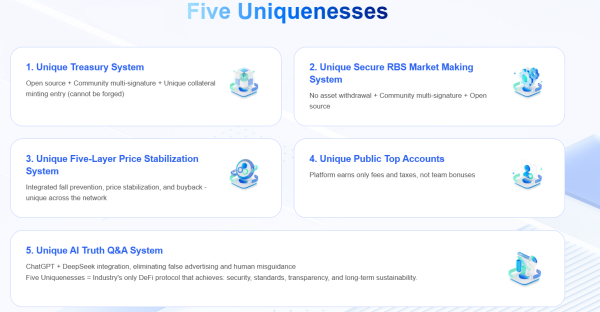
In an ecosystem often defined by rapid change and experimentation, Crypto DAO stands out for its deliberate, principle-driven approach. By centering its design on Security, Stability, and Sustainability—and by rejecting human governance, centralized control, and opaque mechanisms—the project articulates a clear vision of what decentralized finance could become.
Whether Crypto DAO ultimately achieves its ambition of creating a “financial system that cannot do evil” remains to be seen. However, its architecture and philosophy contribute meaningfully to ongoing discussions about trust, governance, and responsibility in blockchain-based systems.
As DeFi continues to evolve, initiatives like Crypto DAO highlight an important truth: the most transformative innovations may not be those that move fastest, but those that are built to last.
Media Contact
Organization: Crypto DAO
Contact Person: Sam kirs
Website: https://cryptodao.it.com
Email: Send Email
Country:United States
Release id:39159
The post Crypto DAO: Building a Financial System That Cannot Do Evil Through On-Chain Governance appeared first on King Newswire. This content is provided by a third-party source.. King Newswire makes no warranties or representations in connection with it. King Newswire is a press release distribution agency and does not endorse or verify the claims made in this release. If you have any complaints or copyright concerns related to this article, please contact the company listed in the ‘Media Contact’ section

Disclaimer: The views, suggestions, and opinions expressed here are the sole responsibility of the experts. No Emerald Journal journalist was involved in the writing and production of this article.